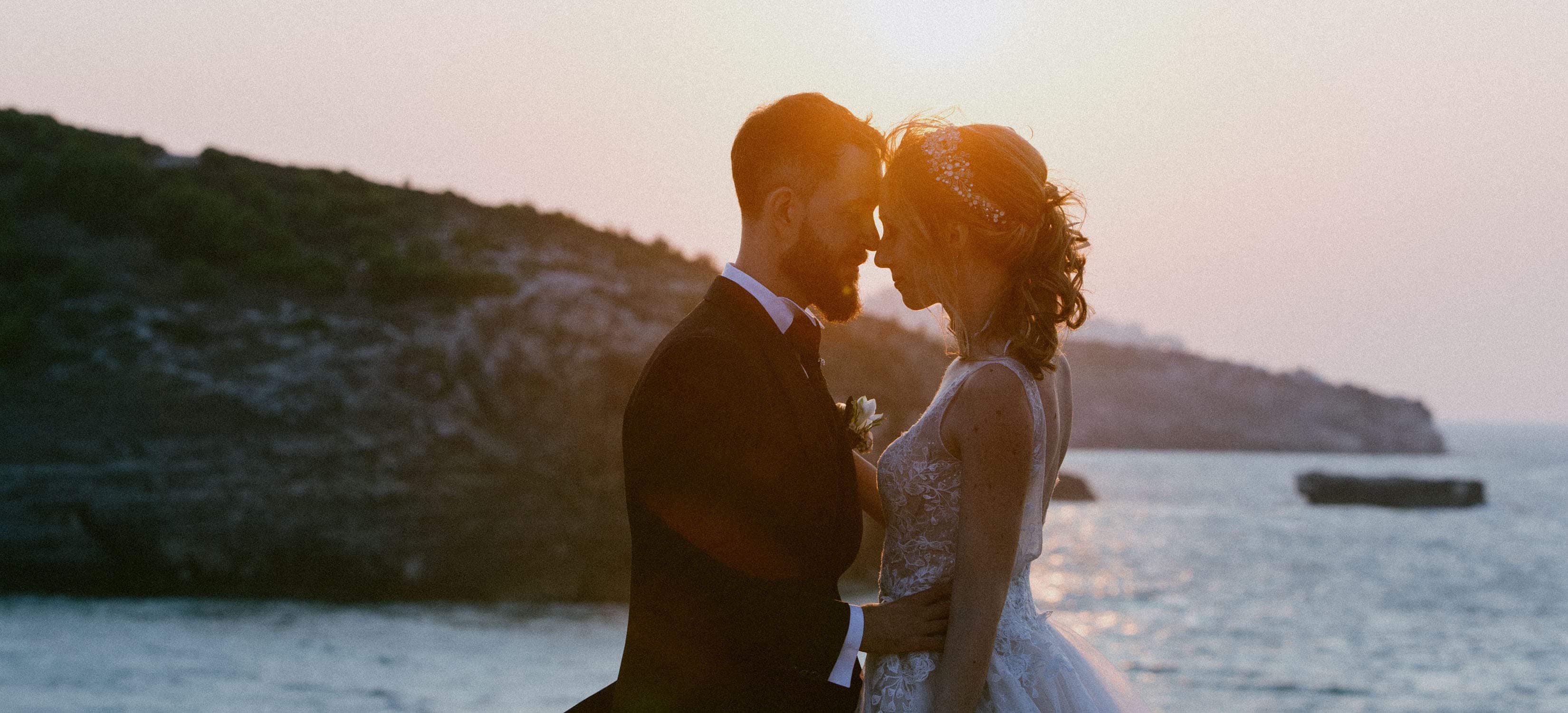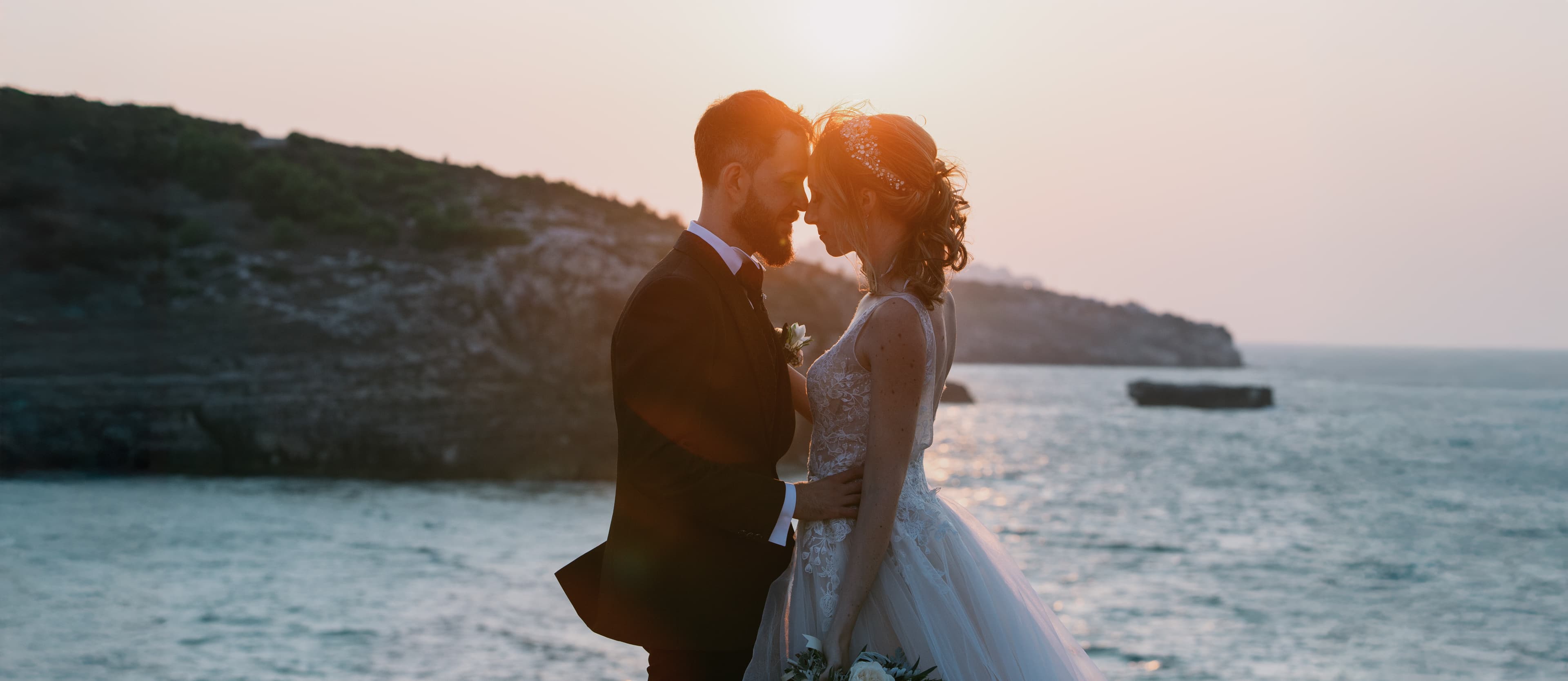
Getting married in Puglia means stepping into a landscape where tradition, nature, and everyday life still move at a slower pace. Located in the heel of Italy’s boot, this region offers a rare combination of dramatic coastlines, ancient olive groves, whitewashed towns, and historic masserie — settings that feel authentic rather than curated.
As a Puglia wedding photographer, I’ve had the opportunity to document many weddings across this region, and each return deepens my connection to it. From the rugged Adriatic coast to the quiet countryside shaped by centuries of agriculture, Puglia has a way of grounding celebrations in place. Weddings here feel unhurried, intimate, and deeply lived — qualities that naturally shape the way I photograph them.
Guido Tramontano Guerritore
The Magic of a Destination Wedding in Puglia
Picturesque towns and amazing landscape

The Unique Apulian Landscape: Coastal Beauty Meets Rolling Countryside
One of Puglia’s defining qualities is the contrast between sea and countryside. The region stretches between the Adriatic and Ionian Seas, offering a coastline shaped by cliffs, hidden coves, and open horizons. Coastal ceremonies feel expansive and elemental, often accompanied by strong light, wind, and the constant presence of the sea.
Inland, the landscape shifts into rolling fields, olive groves, and quieter rural settings. Areas such as the Gargano National Park introduce a more untamed character, where forests, cliffs, and isolated paths create a sense of solitude and scale. Whether a wedding unfolds by the water or among the hills, the diversity of Puglia’s landscapes allows each celebration to develop its own visual rhythm.
These environments are not simply backdrops. They influence the pace of the day, the quality of light, and the way moments naturally unfold — all elements that shape how the story is photographed.

The Charm of Apulian Towns: Trulli, Tradition, and Romance
Puglia is home to some of the most distinctive and character-rich towns in Italy, many of which offer exceptional settings for weddings or for welcoming guests in the days surrounding the celebration. Each town carries its own atmosphere, shaped by history, architecture, and its relationship with the landscape.
Alberobello is instantly recognizable for its trulli — whitewashed stone houses with conical roofs found nowhere else in the world. Recognized as a UNESCO World Heritage Site, the town feels almost suspended in time. Whether used as a backdrop for portraits or for a ceremony in one of its small squares, Alberobello lends weddings a sense of quiet magic and visual continuity that feels both intimate and timeless.
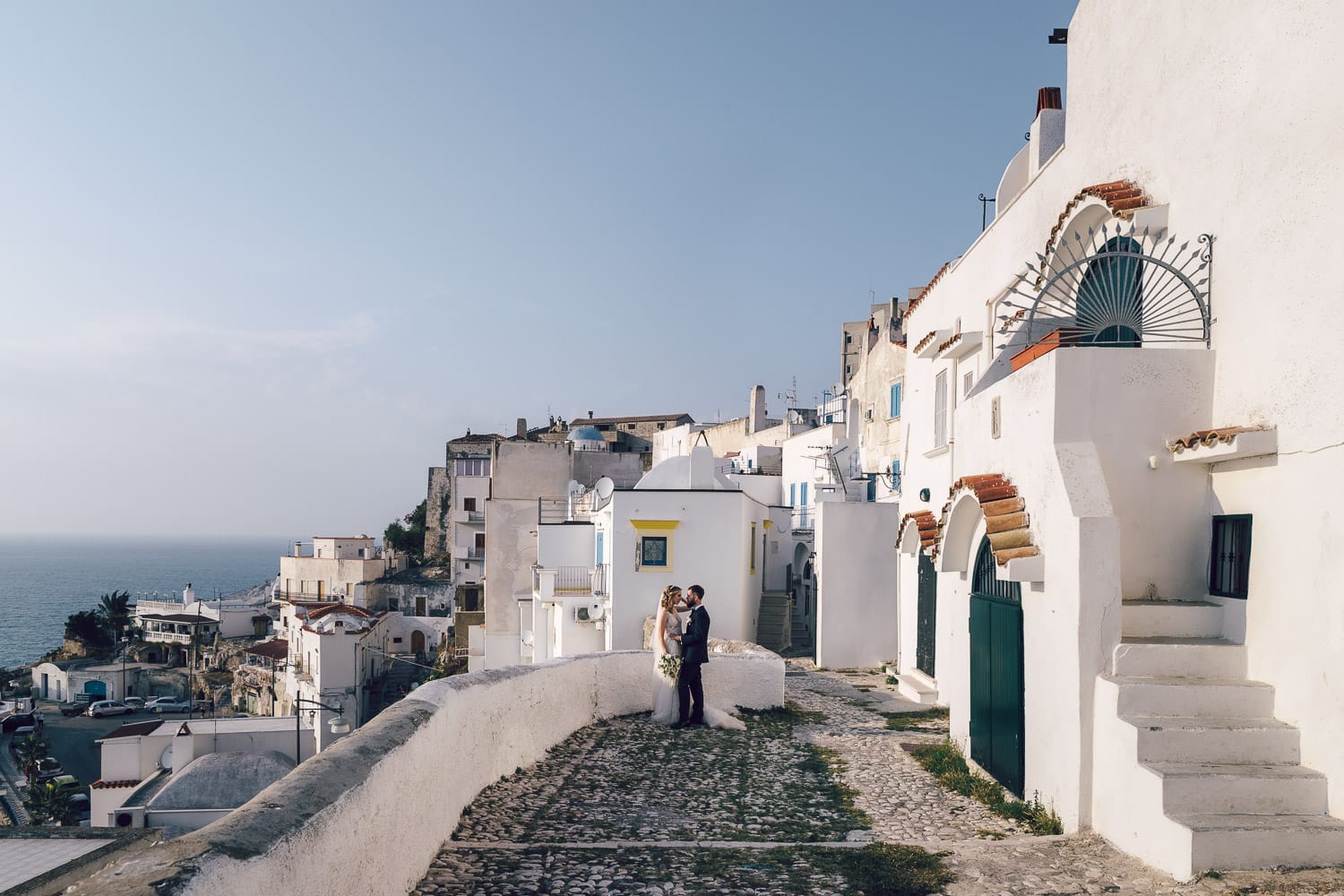
Ostuni, often referred to as the White City, rises on a hill overlooking the Adriatic. Its narrow streets and white façades reflect light softly throughout the day, shifting with the hours. The blend of historic architecture and subtle modern details creates an atmosphere that feels elegant without being formal. Walking through Ostuni together, away from crowds, naturally leads to photographs that feel personal and unforced.
On the northern coast of Puglia, Peschici offers a more elemental setting. Perched above the sea on the Gargano Peninsula, the town combines white stone houses, steep cliffs, and wide views over the Adriatic. Its coastal character, shaped by wind, light, and open horizons, appeals to couples drawn to a relaxed celebration with a strong connection to nature.
Further south, Polignano a Mare introduces a dramatic contrast. Built along limestone cliffs above the water, the town is known for its striking viewpoints and venues overlooking the sea. Enclosed streets suddenly open onto vast seascapes, creating transitions that translate beautifully into photographs and give ceremonies a powerful sense of scale and emotion.
Photographing weddings in these towns means paying attention to how space guides people. Architecture, light, and scale naturally influence movement and pace, encouraging genuine interactions and quiet moments. Rather than dominating the story, these places support it — allowing images to emerge from the relationship between the couple, their guests, and the environment around them.


Masserie: Rustic Elegance for Every Wedding Style
Masserie are one of the most distinctive elements of a wedding in Puglia. Originally built as fortified farmhouses, these historic estates are deeply connected to the land that surrounds them — olive groves, vineyards, dry-stone walls, and open countryside stretching in every direction. Over time, many have been carefully restored, preserving their original architecture while introducing a level of comfort and refinement that makes them ideal for contemporary celebrations.
What makes a masseria particularly special as a wedding venue is its sense of enclosure and continuity. Ceremonies, receptions, and gatherings often unfold within the same property, allowing the day to flow naturally without constant movement. Courtyards become intimate ceremony spaces, olive groves frame aperitifs at sunset, and stone interiors offer a warm, tactile setting once the light fades. The experience feels immersive — more like inhabiting a place than simply using a venue.
From a photographic perspective, masserie offer a rare balance of structure and softness. Thick stone walls shape light gently, outdoor spaces create natural transitions between moments, and the surrounding landscape remains present without overwhelming the scene. There is no need to impose a mood — the setting already encourages calm, connection, and unhurried movement.
Having photographed weddings across several masserie in Puglia — including properties such as Masseria San Nicola and Masseria Torre Coccaro — I’ve seen how these spaces adapt effortlessly to very different celebrations. Whether the atmosphere is formal or relaxed, minimal or abundant, masserie provide a coherent visual and emotional framework that allows each wedding to feel personal and unforced.
Planning a wedding in a masseria is not just about aesthetics. It’s about choosing a place that invites people to slow down, stay present, and experience the day as a shared rhythm — shaped by light, space, and the quiet strength of the land itself.


Photography Opportunities in the Apulian Countryside
There is a particular quality of light in the Apulian countryside that defines how weddings are photographed here. Especially in the late afternoon, the landscape seems to soften — olive groves take on a silvery tone, stone walls warm gradually, and open fields create a sense of space that allows moments to breathe. Golden hour in Puglia is never rushed; it unfolds slowly, encouraging couples to linger, move naturally, and remain present.
What I find most compelling about photographing weddings in this region is the balance between openness and intimacy. The countryside offers vast, uncluttered settings, yet the rhythm of the day often feels calm and grounded. Couples tend to slow down, interactions become quieter, and gestures feel more intentional. This atmosphere translates into photographs that feel honest, layered, and deeply connected to the environment.
Having grown up and worked extensively along the Amalfi Coast, I’m especially aware of how different landscapes influence both energy and storytelling. Where the coast is dramatic and vertical, the Apulian countryside is expansive and horizontal. That contrast shapes not only the visual language of the images, but also the emotional pace of the day. In Puglia, there is room for stillness — and that stillness often reveals the most meaningful moments.
From ancient olive trees to open farmland and historic masserie set into the land, the Apulian countryside offers a richness that feels cinematic. It doesn’t demand attention; it supports the story as it unfolds. Over the years, working in these environments has taught me how to observe light carefully, anticipate movement, and allow scenes to develop without interference — letting the place, and the people within it, guide the photographs.


Why Puglia Is the Perfect Destination for Your Wedding
Puglia offers a rare balance of beauty, authenticity, and simplicity. Whether a celebration takes place by the sea, inside a masseria, or within a historic town, the region allows weddings to feel meaningful without becoming overwhelming.
Each time I photograph a wedding here, I’m reminded of how naturally Puglia invites connection — between people, between moments, and between the celebration and its surroundings. It’s a place where time seems to slow, and where emotion has room to surface without being directed.
Puglia is also an ideal setting for intimate celebrations, and many couples choose to plan elopements among olive groves, along the Adriatic coast, or in quiet rural corners of the region.
Whether you’re drawn to Puglia’s quiet authenticity or Tuscany’s timeless elegance, I bring the same attentive, documentary approach to every story I photograph.
Puglia wedding photography – Frequently Asked Questions
Planning a destination wedding in Puglia often comes with practical questions about venues, seasons, logistics, and photography style. Below I’ve answered the questions I’m most frequently asked by couples considering this beautiful region for their wedding day, based on my experience photographing weddings across Apulia.
What makes Puglia a unique destination for wedding photography?
Puglia offers a rare combination of elements that work incredibly well together visually: dramatic coastlines, centuries-old masserie, whitewashed towns, and endless olive groves. As a Puglia wedding photographer, what I love most is the authenticity of the region — it feels untouched, calm, and deeply rooted in tradition. The light is softer than many expect, especially in the countryside, and the landscapes allow weddings to feel intimate, cinematic, and timeless rather than staged or overly formal.
Which are the best wedding venues in Puglia for photography?
Masserie are among the most iconic and photogenic wedding venues in Puglia. Properties such as Masseria Torre Coccaro and Masseria San Nicola combine historic stone architecture with open courtyards, olive trees, and natural textures that photograph beautifully in any light. Coastal venues near Polignano a Mare or the Gargano Peninsula offer dramatic sea views, while countryside masserie provide privacy, space, and a slower rhythm that translates perfectly into storytelling photography.
What is the best time of year to get married in Puglia?
Late spring (May–June) and early autumn (September–early October) are ideal for weddings in Puglia. During these months, the temperatures are comfortable, the light is warm and golden, and the countryside is at its most beautiful. Summer weddings are very popular but can be hot, especially in inland areas — something I always consider when planning timelines to ensure relaxed portraits and natural moments without rushing.
Is Puglia suitable for intimate weddings and elopements?
Absolutely. Puglia is perfect for intimate weddings and elopements. Many masserie offer secluded spaces ideal for small celebrations, while coastal cliffs, olive groves, and historic towns provide stunning backdrops for symbolic ceremonies. As a Puglia wedding photographer, I often work with couples who want a meaningful, experience-focused wedding day rather than a traditional large event — and Puglia supports that vision beautifully.
How does light and landscape influence your photography style in Puglia?
Puglia’s light is one of its greatest assets. The combination of open landscapes, pale stone architecture, and Mediterranean skies creates soft, flattering light throughout the day, especially during golden hour. I photograph weddings here by working with the natural rhythm of the light rather than against it — using shade, reflections, and open spaces to create images that feel natural, emotional, and timeless, without forced posing.
Do you help couples plan photography timelines for Puglia weddings?
Yes — guiding couples through timing is a crucial part of my work. From understanding how long sunset lasts in different seasons to choosing the best moments for portraits in masserie courtyards or by the sea, I help structure the day so photography feels effortless. Especially in destination weddings, a well-planned timeline ensures you can fully enjoy the experience while still capturing meaningful, beautiful images.