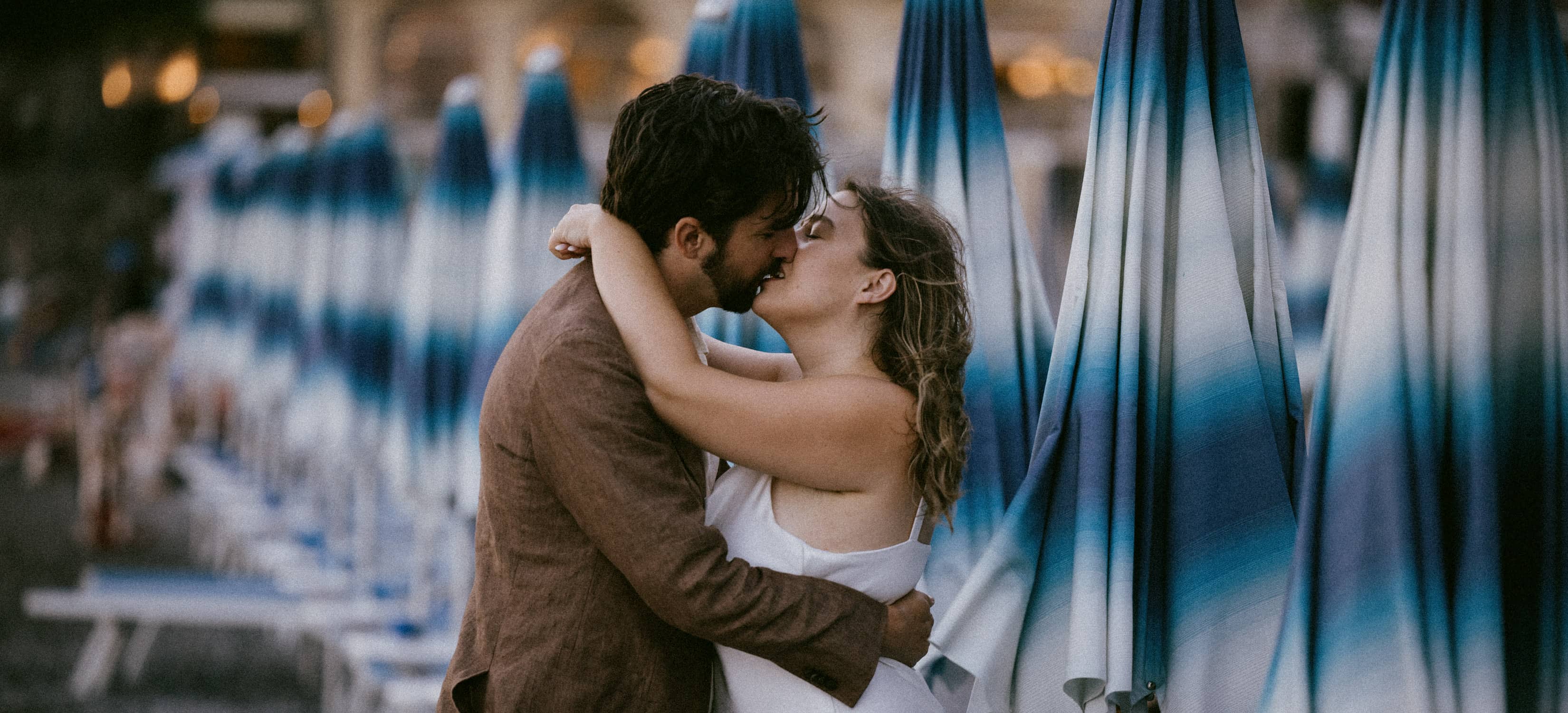
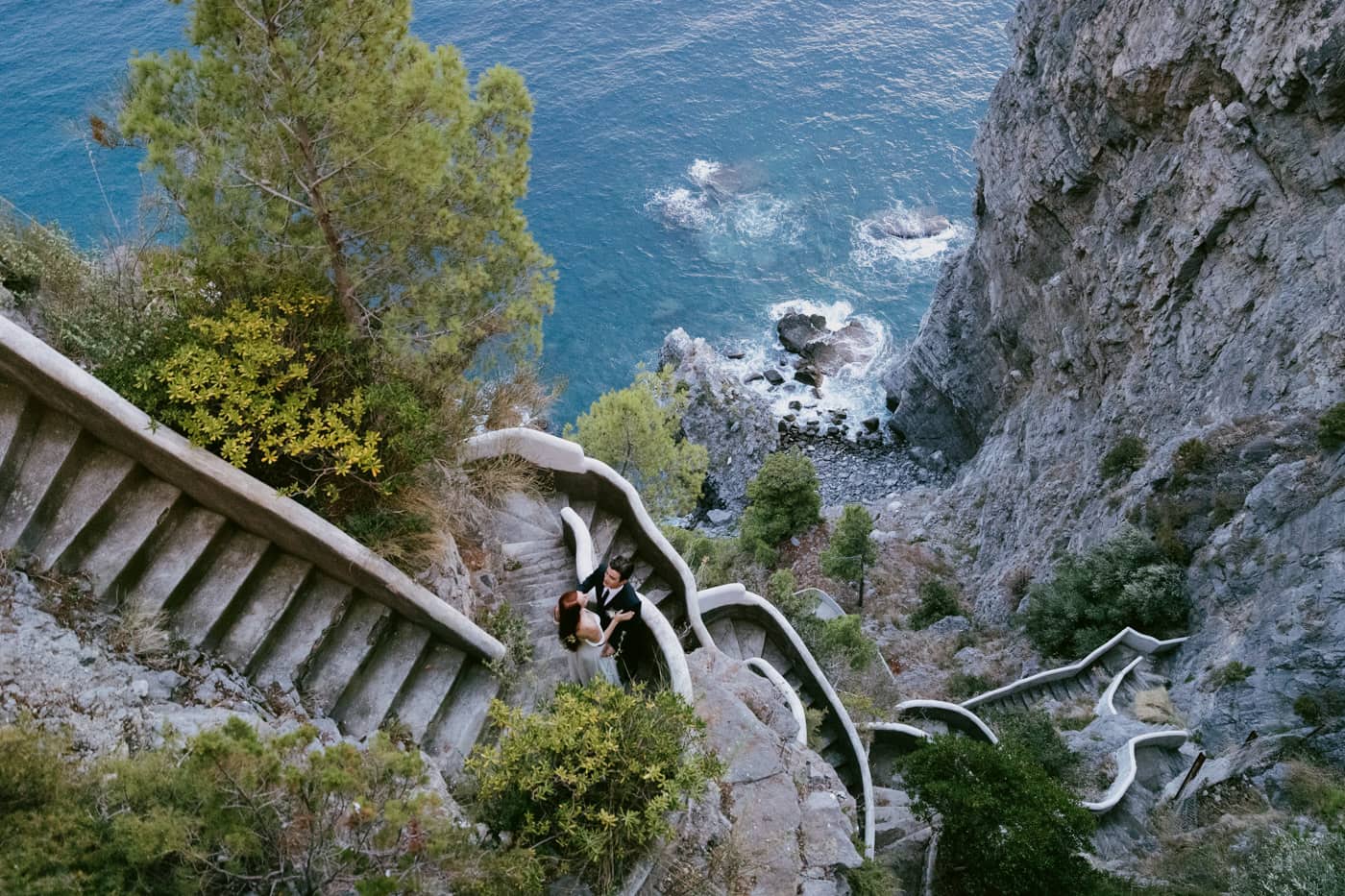
The Amalfi Coast has long been a place where people come to slow down, breathe deeply, and celebrate life’s most meaningful moments. With its dramatic cliffs, shifting light, and villages shaped by centuries of history, it offers an atmosphere that feels naturally intimate and never excessive.
This guide is written from the perspective of someone who photographs elopements and weddings along the Amalfi Coast year after year, moving through places like Positano, Ravello, Praiano, and quieter corners that rarely make it into guidebooks.
Here, eloping isn’t about escaping tradition — it’s about choosing presence. Fewer expectations. More meaning. Whether you’re planning a symbolic ceremony at sunrise or a relaxed vow exchange overlooking the sea, the Amalfi Coast offers the space to shape a day that feels entirely your own.
This guide walks you through the essentials of planning an elopement here: choosing the right location, understanding timing and light, navigating logistics, and creating an experience that feels personal, calm, and deeply connected to place.
Introduction
Why Choose the Amalfi Coast for Your Elopement?

A Setting that Feels Naturally Romantic
Designated a UNESCO World Heritage Site, the Amalfi Coast is defined by contrast: steep cliffs meeting open sea, narrow alleys opening onto wide horizons, quiet mornings giving way to glowing evenings. It’s a landscape that doesn’t need embellishment — it already carries emotion.
Whether you imagine exchanging vows on a cliffside terrace, within the gardens of a historic villa, or tucked into a quiet village square, the coast offers settings that feel intimate by nature rather than design.
Intimacy, Simplicity, and Freedom
Elopements are all about intimacy and simplicity. Choosing to elope on the Amalfi Coast allows you to focus on what truly matters—your love and commitment to each other—without the stress of planning a large wedding. The region’s secluded spots and luxurious venues cater perfectly to couples seeking a private and personal celebration.
Charming boutique hotels and elegant villas are also abundant, offering a blend of exclusivity and romance, ideal for couples who want a personal, tailor-made experience. Whether it's a quiet ceremony with just the two of you or a small gathering with close loved ones, an elopement on the Amalfi Coast ensures that every moment is filled with meaning, free from distractions, and focused entirely on your commitment to each other.

Culture, History, and Quiet Luxury
The Amalfi Coast balances refinement with authenticity. Elegant villas sit alongside everyday life; long lunches follow morning swims; celebrations feel layered rather than performative.
Local cuisine, historic architecture, and the coast’s deep-rooted traditions naturally shape the day. The result is an elopement that feels grounded — rich in experience, not excess.
Best Locations for an Elopement on the Amalfi Coast
Below is a curated overview of some of the most meaningful locations for an elopement. For a deeper dive into venues, logistics, and ceremony options, you may also want to explore this detailed resource.
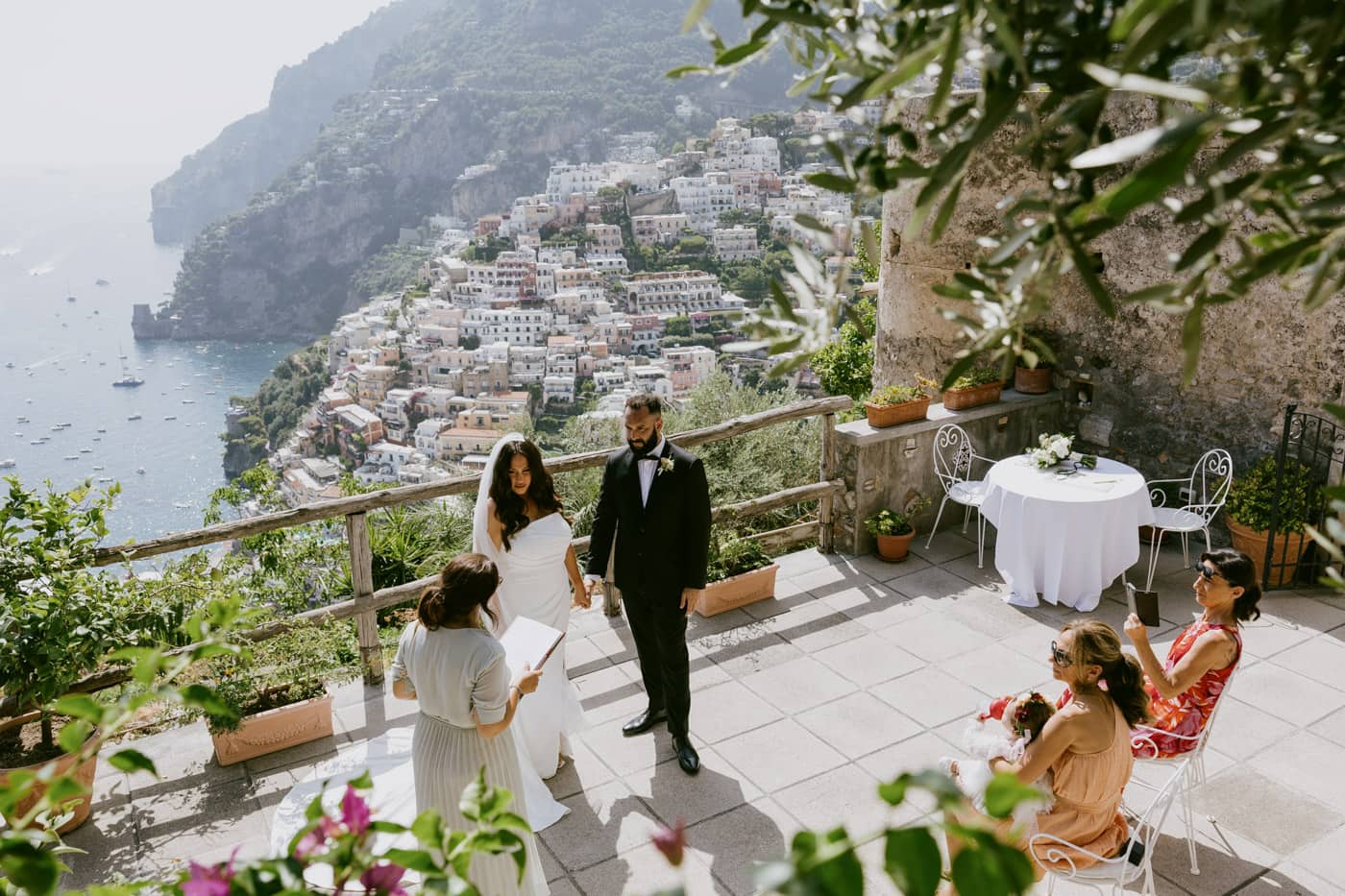
Positano: Iconic, cinematic, and full of movement
Positano is instantly recognizable — a cascade of pastel buildings spilling toward the sea. It offers dramatic perspectives, layered streets, and terraces that feel suspended between sky and water.
Early mornings and golden hour are particularly magical here, when the town softens and crowds thin. Iconic venues like Le Sirenuse or Villa Treville offer privacy and sweeping views, while quieter corners provide space for unhurried portraits and private moments.
Positano is especially meaningful for couples who embrace movement and contrast — where elegance and spontaneity coexist in a way that feels effortlessly alive.
If Positano’s dramatic energy and layered scenery resonate with you, you can explore my work there in more depth.


Ravello: Elevated, serene, and timeless
Perched high above the coastline, Ravello feels calmer and more contemplative. Its gardens, villas, and wide terraces create a sense of stillness that many couples are drawn to.
Locations such as Villa Cimbrone or Villa Rufolo are renowned for their panoramic views and historic elegance.
Ravello is less crowded than some of the other towns on the Amalfi Coast, making it an ideal location for a quiet and intimate elopement. The town’s historic charm and natural beauty make it a favorite among couples looking for a romantic escape.
Ravello suits couples who value stillness and perspective, offering a sense of quiet elevation that naturally invites reflection and presence.
If Ravello’s quiet elegance and elevated perspective feel right for you, you can learn more about how I photograph weddings and elopements there.

Amalfi: Historic, vibrant, and deeply rooted
Amalfi, the town that gives the coast its name, is another fantastic option for an elopement. It’s rich in history and culture, with its famous Duomo di Amalfi and charming piazzas. You can exchange vows in a historic church or on a terrace with a view of the harbor.
Amalfi offers a perfect mix of history, culture, and stunning views, making it an ideal choice for couples who want to experience the essence of the Amalfi Coast. The town is also home to several luxury hotels and villas, such as the Hotel Santa Caterina and Villa Santa Maria, which offer beautiful settings for your ceremony and stay.
Amalfi carries a ceremonial energy — grounded, historical, and quietly powerful — ideal for couples drawn to tradition without formality.

Atrani: Intimate and understated
For a truly unique and secluded elopement, consider Atrani, one of the smallest towns on the Amalfi Coast. With its narrow streets, piazzas, and a picturesque beach, Atrani offers a more intimate and less touristy experience. The town’s charm and authenticity make it a perfect location for couples who want a quiet and romantic elopement on the Amalfi Coast away from the crowds.
Atrani feels intimate and unpolished, a place where the pace slows naturally and the experience becomes quietly personal rather than performative.

Praiano: Light-filled, peaceful, and deeply atmospheric
Praiano’s position along the coast makes it one of the best locations for sunset light. Less crowded than Positano, it offers wide sea views, calm streets, and a slower rhythm. The Church of San Gennaro, with its tiled terrace overlooking the water, is a meaningful choice for intimate ceremonies. Praiano is particularly well suited for couples who value space, light, and quiet presence.
In addition to its scenic beauty, Praiano offers a range of luxurious accommodations, such as Casa Angelina and Hotel Tramonto d’Oro, where you can enjoy a romantic stay with stunning views of the coast.
Praiano has a contemplative rhythm, where sunsets arrive slowly and intimacy feels woven into the landscape itself.
For couples drawn to its quieter atmosphere and extraordinary light, I share more about photographing weddings and elopements in Praiano here.
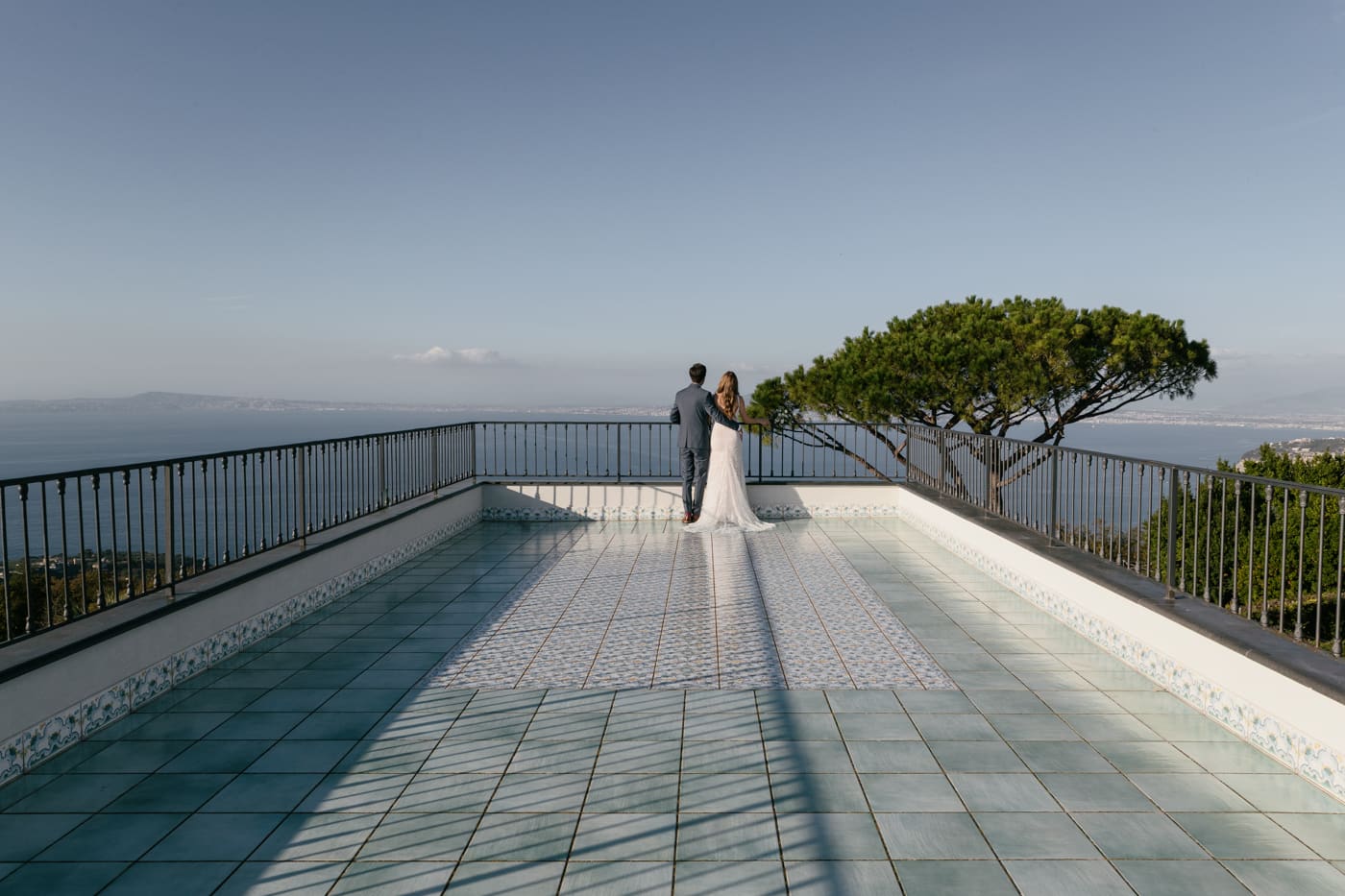
Sorrento: Light, space, and a slower rhythm
Sorrento sits at the edge of the Amalfi Coast with a character that feels both elegant and grounded. Compared to the steep, vertical villages further south, Sorrento offers wider streets, open terraces, and expansive views over the Bay of Naples — creating a sense of space that many couples find calming.
The light here behaves differently. With fewer cliffs to interrupt it, sunlight is more even and predictable throughout the day, making Sorrento especially well suited for relaxed ceremonies, daytime celebrations, and longer portrait sessions without the intensity found in more exposed coastal towns. Gardens, historic villas, and clifftop hotels offer soft transitions between architecture, greenery, and sea.
Sorrento is ideal for couples who want the atmosphere of southern Italy without feeling confined by narrow pathways or steep movement. It works beautifully for weddings that blend elegance and ease — where time unfolds gently and the focus remains on connection, experience, and presence.
If you’re considering Sorrento as your base on the coast, you can explore my approach to photographing weddings and elopements there.

Planning Your Elopement on the Amalfi Coast

Legal Requirements
Non-residents can legally marry in Italy, but certain documents are required, including a Nulla Osta issued by your country’s embassy. While the process is manageable, many couples choose to work with a local planner to ensure everything runs smoothly and without stress.

The most balanced months for an elopement are:
- April–June: mild temperatures, softer light, fewer crowds
- September–October: warm seas, golden sunsets, calmer towns
July and August are vibrant but busy and hot; winter months are quieter but can be unpredictable, with some venues closed.

Working with Local Professionals
A local planner can help coordinate permits, vendors, and logistics — particularly useful for symbolic ceremonies or celebrations in less accessible locations.
Choosing a photographer familiar with the coast is equally important. Knowing how light moves across cliffs, when towns are quiet, and how to navigate narrow streets makes a significant difference in how relaxed and fluid the day feels.


Creating a Ceremony That Feels Like You
Eloping on the Amalfi Coast allows for complete freedom. Whether your ceremony is symbolic or legal, formal or spontaneous, the focus is on meaning rather than structure.
Some couples exchange vows at sunrise, others at golden hour. Some walk through villages afterward; others celebrate with a long dinner overlooking the sea. Local traditions — from food to music — can be woven in naturally, without feeling prescribed.


Capturing the Experience
An elopement on the Amalfi Coast isn’t just about the ceremony — it’s about movement, pauses, and the spaces in between. Wandering through streets, sitting quietly above the water, or taking a short boat ride can all become part of the story.
Timing your photos around the light — especially at golden hour — allows the coast’s natural beauty to enhance the emotional tone of the day rather than overpower it.

Understanding Light & Weather on the Amalfi Coast

The Amalfi Coast is breathtaking in every season, but its character changes constantly depending on light, time of day, and weather. As a photographer, these elements guide almost every decision I make — often instinctively — but for couples planning an elopement here, understanding how light behaves along the cliffs can make the experience calmer, more fluid, and far more intentional.
This coastline isn’t flat or predictable. Villages cling to rock faces, streets twist vertically as much as they do horizontally, and the mountains create shifting pockets of shade and sun throughout the day. One terrace may be flooded with light, while just a few steps away everything feels cool and quiet. That contrast is part of what gives the Amalfi Coast its depth — and it’s something worth embracing rather than fighting.

Mornings on the Amalfi Coast feel like the coast is still waking up. The air is cooler, the streets are quieter, and the light has a gentle, wrapping quality that flatters both people and places.
Morning light is ideal if you’re drawn to:
- empty streets and piazzas
- peaceful terraces without distractions
- a slower, more private pace
- cooler temperatures for walking and exploring
In towns like Positano, early light brings out softer pastel tones and allows space to move without interruption. For couples who value stillness and intimacy, a morning ceremony or photo session often feels surprisingly emotional and grounded.

Midday Light: Bright, Bold, and Expressive
As the sun rises higher, the light becomes stronger and more directional — especially in exposed coastal towns. Midday on the Amalfi Coast is vivid and intense, with deep blues, sharp contrasts, and bright reflections from the sea and stone.
While this light can be challenging for traditional portraits, it works beautifully for:
- boat elopements and time on the water
- capturing the sea at its most saturated and luminous
- couples who prefer energy and atmosphere over softness
In summer, this is also the warmest part of the day, so thoughtful pacing — shade, breaks, and slower transitions — becomes essential.


Golden Hour: Warm, Cinematic, Unforgettable
This is the moment many couples fall in love with before they even arrive. As the sun drops behind the mountains, the cliffs catch warm light, colors soften, and the entire coastline seems to slow down. Golden hour on the Amalfi Coast feels cinematic without effort — warm, dimensional, and emotionally charged.
In Positano, the town fades into gentle pastels.
In Ravello and Amalfi, terraces and gardens glow with long, textured shadows.
Praiano, with its unique position facing the setting sun, often feels suspended in light during these moments. Golden hour is ideal for couple portraits after the ceremony — unhurried, natural, and deeply atmospheric.


Blue Hour: Quiet, Intimate, Almost Dreamlike
Just after sunset, the coast takes on a different personality. The sea deepens to indigo, the sky turns soft and layered, and village lights begin to glow.
Blue hour is perfect for:
- atmospheric portraits
- cinematic imagery with depth and contrast
- elopements that feel reflective and intimate
It’s often one of the calmest moments of the day — a gentle way to close the experience, when everything feels settled and unspoken.


Weather & Seasons on the Amalfi Coast
Each season shapes the experience in its own way:
- April–June: Mild temperatures, blooming landscapes, softer light, and fewer crowds
- July–August: Bright, hot, and lively — ideal for evening ceremonies and boat experiences
- September–October: One of the most balanced periods, with warm days and calmer energy
- November–March: Quiet, moody, and unpredictable — best for couples drawn to dramatic skies and empty streets
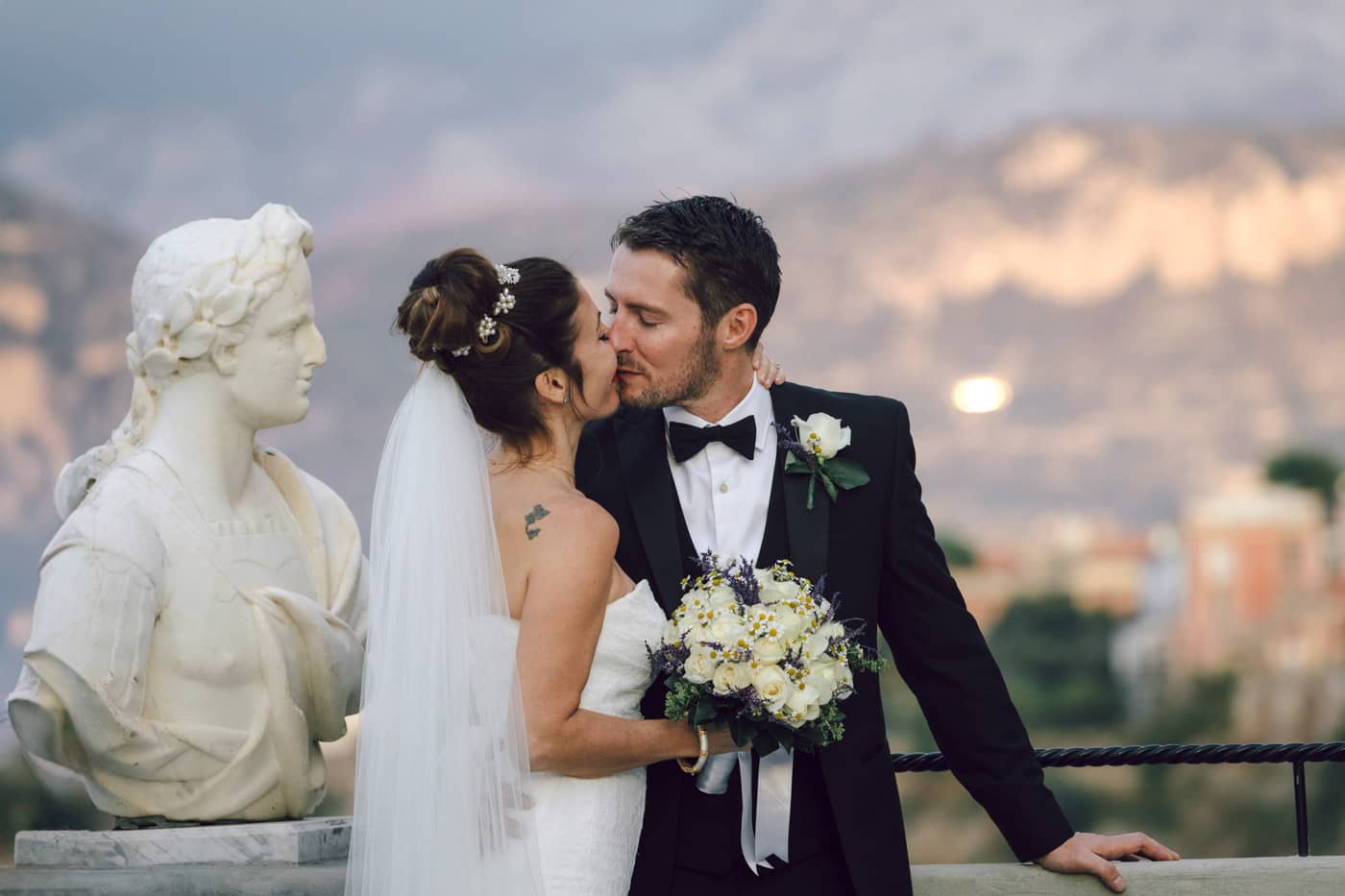
Conclusion
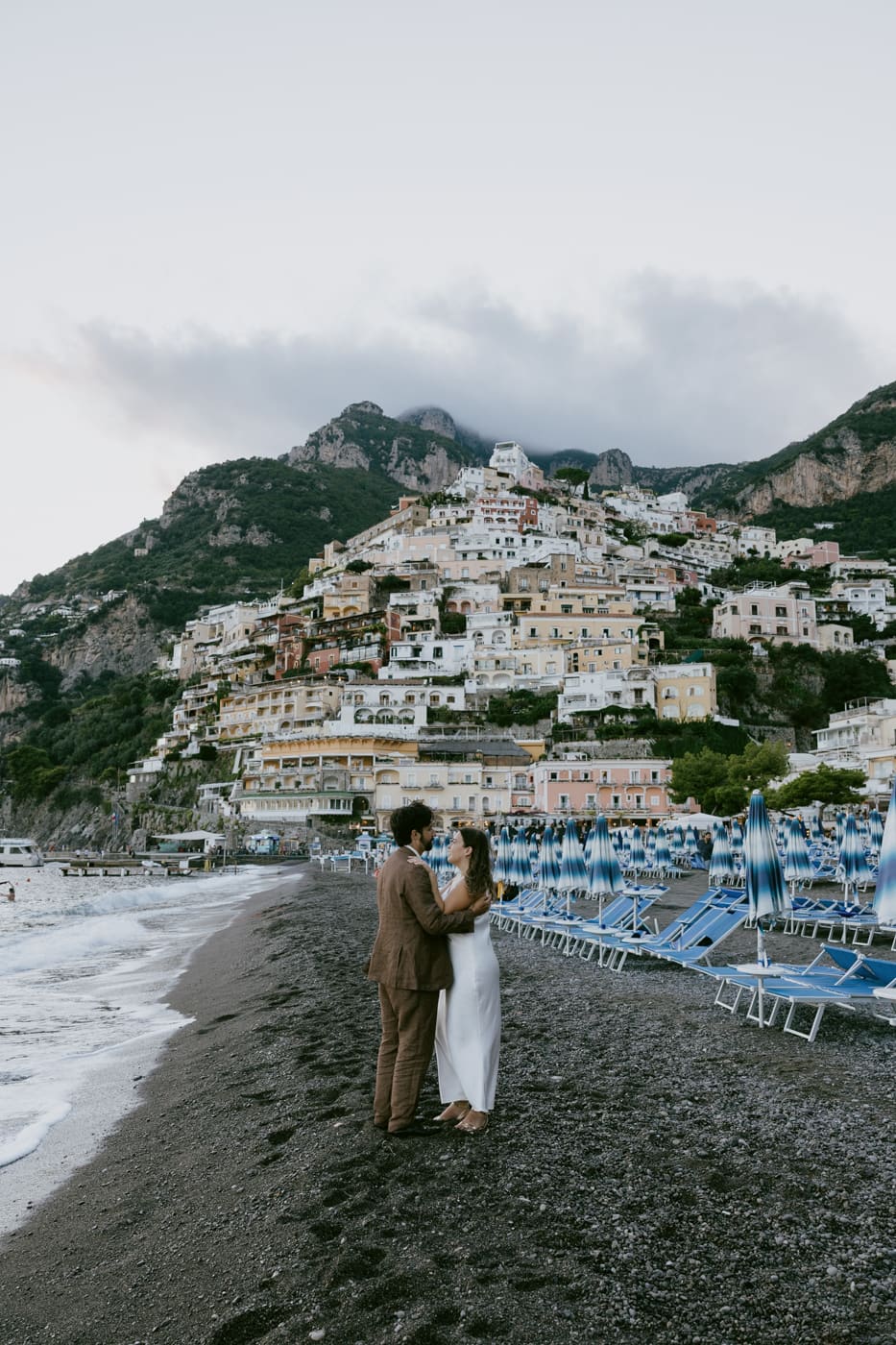
An elopement on the Amalfi Coast isn’t about doing more — it’s about doing less, with intention. Slower mornings, unplanned pauses, and a day that leaves space for you to simply be together.
In that kind of setting, the relationship we build matters. I work close enough to understand your true nature, and with enough distance to let things unfold naturally. That balance is what helps you feel at ease — and what allows the photographs to stay honest to the experience.

